
Emission reduction for explosion groups IIA, IIB, and IIC
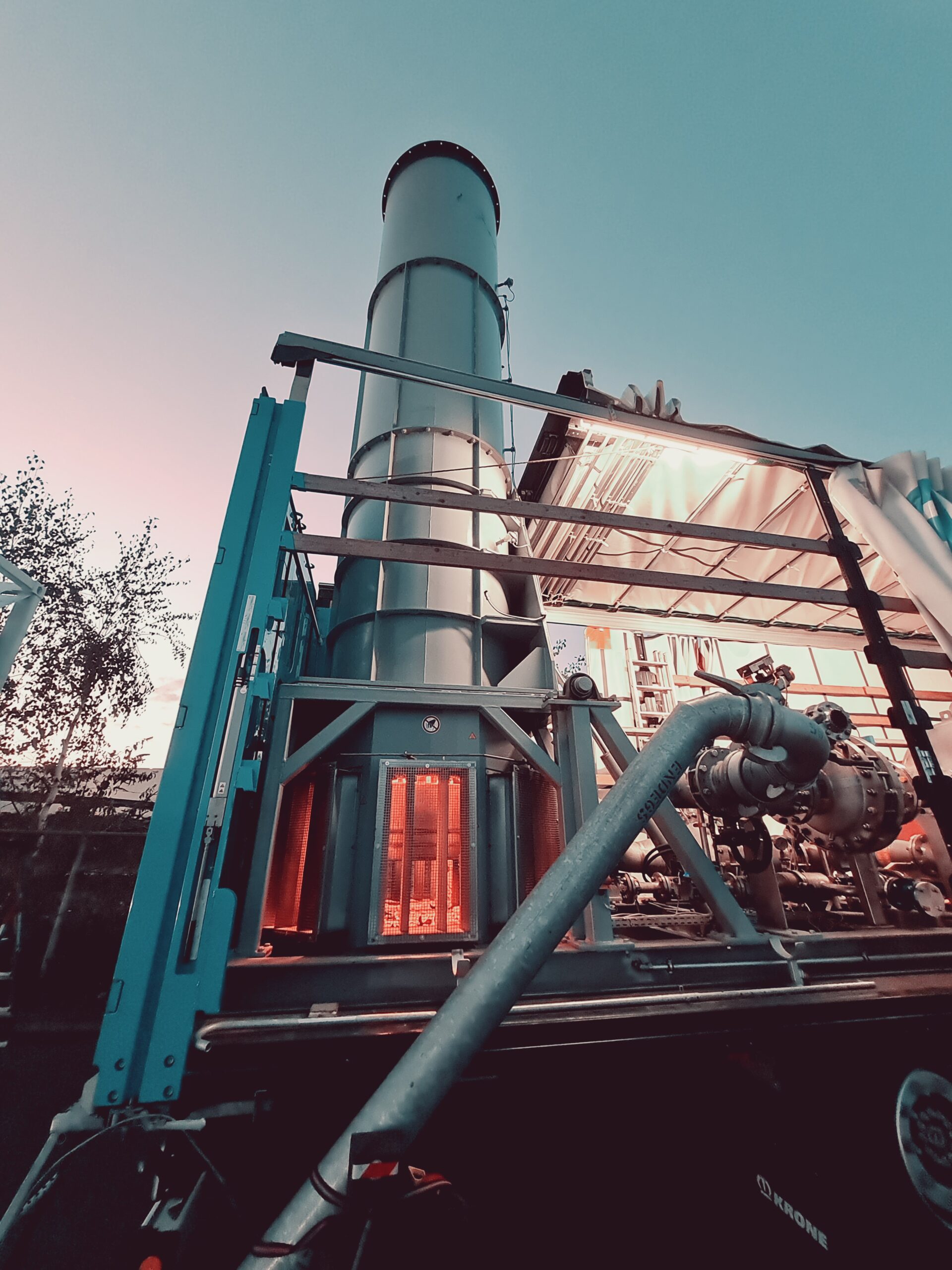
Flammable gases and vapors are generated or released in many industrial processes. This can occur during normal operations as well as during product storage, filling and emptying operations, product changeovers, maintenance work, or when preparing tanks and facilities for inspections. To prevent harmful emissions from being released uncontrolled into the atmosphere, technical emission reduction methods are applied thar are suitable for treating substances and mixtures classified in explosion groups IIA, IIB, and IIC.
What do IIA, IIB, and IIC mean?
The designations IIA, IIB, and IIC originate from the field of explosion protection. They classify flammable gases and vapors according to their explosion-related properties. This classification is particularly important when selecting and designing suitable equipment and safety systems.
An explosive atmosphere can form when a flammable substance mixes with air oxygen within a certain concentration range. How easily such a mixture can be ignited and which requirements for the equipment used result, varies depending on the substance. In general, explosion protection requirements increase from IIA through IIB to IIC. The classification reflects properties that are relevant to ignitability and the propagation of a potential explosion.
- Explosion group IIA: This includes many substances commonly encountered in refineries, tank farms, the chemical industry, and in the storage and handling of petroleum products. Typical examples include propane, gasoline, acetone, ethanol, benzene, toluene and ammonia.
- Explosion group IIB: Substances in explosion group IIB place higher demands on explosion-protected systems. Well-known examples include ethylene, ethene, ethylene oxide and hydrogen sulfide. These substances are particularly relevant in petrochemical and chemical production, storage and processing operations.
- Explosion group IIC: The highly hazardous explosion group IIC places particularly stringent demands in explosion protection. It includes substances that are especially easy to ignite as well as products with particularly demanding explosion protection characteristics. Typical examples include hydrogen, carbon disulfide and acetylene. Applications involving substances in this group therefore require correspondingly high standards for the equipment used.
Challenges in emission reduction
For operators of industrial facilities, the challenge is not only to prevent emissions wherever possible. It is equally important to safely capture and treat unavoidable gas and vapor streams. Technical emission reduction therefore requires consideration of the entire process chain. In addition to the actual treatment unit, this includes components such as hose and piping systems, valves and fittings, blowers, liquid separators and suitable safety equipment.
The explosion group alone is not sufficient for the technical design of a system. Other important parameters for emission reduction include substance concentrations, temperature, pressure, the volume of gas to be treated, flow rate and oxygen content. Potential fluctuations during a process must also be taken into account.
Mobile emission reduction as a flexible and efficient solution
Mobile vapor combustion units can be used to thermally treat flammable gases and vapors under controlled conditions. The gas streams to be treated are captured, conveyed through piping to the combustion chamber and oxidized there under controlled conditions. With a combustion efficiency of more than 99.99%, the release of organic emissions can be significantly reduced – in an environmentally responsible manner and without an open flame.
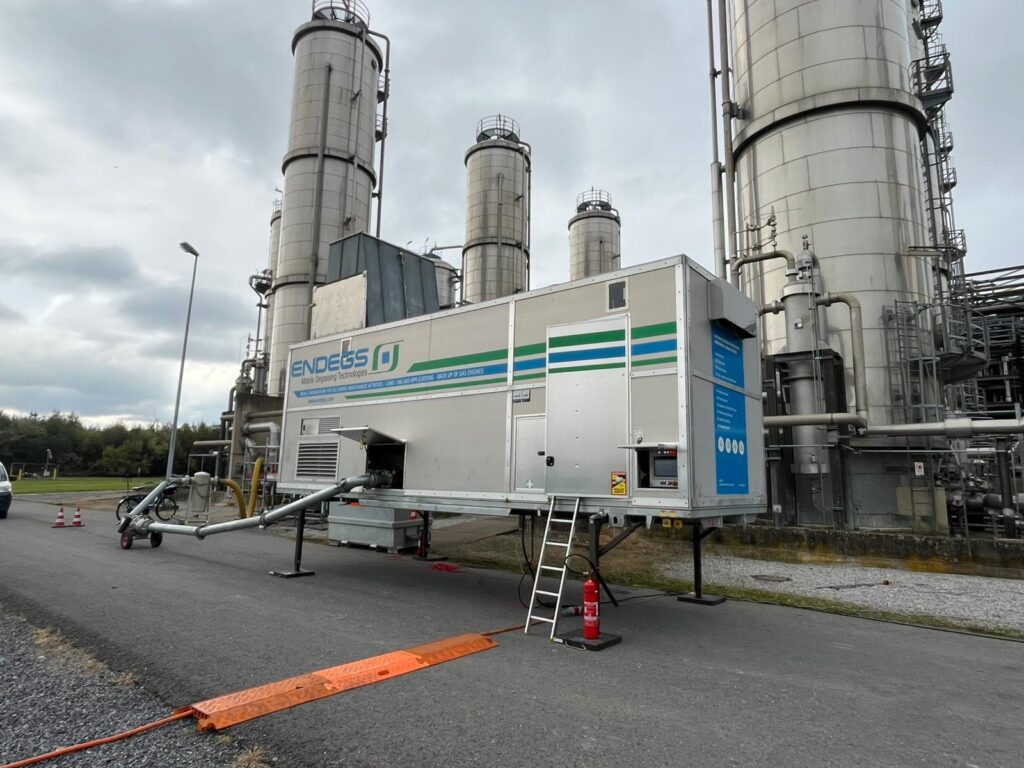
Mobile degassing provides an efficient way to remove exhaust gases, vapors and residual gases from facilities and vessels and subsequently treat them under controlled conditions. ETS Degassing systems are suitable for treating substances from explosion groups IIA, IIB, and IIC. Designed as mobile container or trailer-mounted units, the combustion chambers can be deployed flexibly wherever emissions occur, regardless of location – including tank farms, refineries, ports, loading terminals and chemical plants.
Applications for mobile vapor combustion units in emission reduction include the degassing of tanks, pipelines, ships, inland waterway vessels and other equipment such as vacuum trucks, as well as the temporary replacement of stationary systems like Vapor Recovery Units (VRUs). The mobile units can also be combined with mobile nitrogen vaporizers, enabling the safe handling of liquefied gases such as LNG or ammonia.
Conclusion
Explosion groups IIA, IIB, and IIC are a key factor in the safe treatment of flammable gases and vapors. They influence the selection of suitable components and, together with the relevant process parameters, provide the basis for the proper design of emission reduction systems. Mobile combustion chambers offer a flexible solution for treating gas and vapor streams under controlled conditions directly at the point of use. To ensure the safe and efficient reduction of industrial emissions, the solution must always be tailored to the specific substance, process conditions and application site.
